Product & design leader · San Francisco
Hi, my name is
Johanna Evans
I lead teams that thoughtfully integrate AI into products using empathy, curiosity, and human-centered design.
I am passionate about listening to customers, not just data, to design inclusive products with remarkable user experiences.
Drop me a note if you’d like to see examples.

Field Notes
01 — WritingI told myself “I am not nervous. I am excited.”
Further adventures in Public Speaking.
Read the note-
The Affordance We Haven't Built Yet
Chat interfaces gave us the aesthetic of conversation without its most essential mechanic. Now that AI is executing tasks, the inability to steer mid-flight is expensive.
-
AI Already Took My Job. I Gave It Away on Purpose.
What happens when the tools finally catch up to how your mind works — and what that means for the job you thought you had.
-
Your Employees Are Already There. Your Design Isn't.
The design primitives we urgently need for the age of autonomous AI — and the shadow workforce already building them.
-
Your AI Isn't Untrustworthy — It's Unverifiable
We've spent two years trying to make AI sound more trustworthy. The problem isn't trust—it's verifiability.
-
From Existential Threat to Thriving Force: How AI is Redefining Design
Design, far from being diminished by the rise of AI, is at yet another pivotal moment of evolution. AI doesn't replace design—it demands more from it.
In the meantime, here are a few things about myself.
02 — About-

My level of happiness increases when I am solving complex UX, product, or conversion problems.
-

Understanding and designing thoughtful AI experiences allows me to positively impact more people.
-

Magic happens outside the comfort zone: catch me on stage at Leading Design London, November 12.
-

There is a term for my multidisciplinary roots: I am a “slash” person.
-
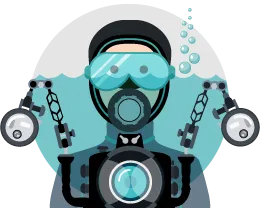
I strive to raise awareness of ocean conservation with my underwater photographs.
From the Stage
03 — SpeakingFor the past two years, I’ve been deliberately handing parts of my job over to AI — from writing feature specs and running early customer discovery to keeping work on-brand across the company.
At Leading Design London, I’ll share what I’ve learned from actually doing it: what I gave away, what worked, what didn’t, and what I found myself doing with the time I got back.
My biggest takeaway? As execution gets cheaper, our value shifts. Less time producing, more time deciding what’s worth making in the first place — and applying the taste, judgment, and context that machines still can’t.
Session detailsDermatologists keep being told that AI is coming for their field. I design AI systems for a living, and I think the real risk points the other way: not that the machine replaces the clinician, but that the clinician quietly stops deciding.
At the Colombian dermatology congress in Bogotá, I make that case from inside the industry. I trained as a physician in Colombia and haven’t seen a patient in twenty years, which is exactly why I want to talk about what these systems actually do, where they fail, and what changes about a diagnosis when a model has already offered an answer.
I walk through three clinical moments where deciding with AI looks different from deferring to it, then take questions alongside practicing dermatologists in a longer conversation with the room. The through line is simple: artificial intelligence proposes, and the physician always decides.
See the highlight →Ask a language model for the evidence behind a treatment decision and it will hand you citations. Some of them will not exist. In one published audit, nearly half the references a chatbot produced were fabricated, and newer models have narrowed that gap without closing it.
In this hands-on hour with Colombian dermatologists, I work through the part nobody trains clinicians to do: how to search with AI, how to validate what comes back, and how to tell when a source is real. We look at the tools built specifically for evidence retrieval, including the ones that actually work for Spanish-language and Latin American literature.
The goal is never to convince anyone to trust these systems. It is to give physicians a repeatable way to decide what deserves their trust, case by case, source by source.
See the post →At Leading Design London, I led a conversation about a question we’d been wrestling with at Guru: how do you design AI systems people can actually trust?
We talked about what builds confidence, and what just looks like it does. I shared what we’d learned from launching Guru’s AI Chat and Research features, including how we thought about trust debt, citations and verification, and the tricky balance between giving people enough transparency to understand what AI is doing without overwhelming them.
The best part was comparing notes with other design leaders facing many of the same questions in their own products.
Session details →In March 2025, I joined a group of design leaders at Leading Design to talk about what AI might mean for our craft, our teams, and the role of design itself.
I hosted a table of leaders wrestling with many of the same questions I was: What skills would still matter? What would we need to let go of? And how do you prepare a team for changes that are moving faster than anyone can comfortably predict?
What I remember most was how candid people were. There was excitement, but also plenty of uncertainty — and no attempt to pretend we had the answers.
Looking back, that’s what makes the conversation interesting. Not whether we predicted what came next, but the questions we were asking at that particular moment in AI.
See the post →In September 2020, I was a guest speaker for Stanford GSB’s Startup Garage, a course that has helped launch companies including DoorDash and SoFi.
I introduced students to customer interviewing and empathy mapping — using what they heard from real customers to get beyond assumptions, understand their needs, and make better decisions about the products they were building.
It was a chance to bring practical, user-centered design methods into the earliest stages of building a company.
See the post →In 2016, I gave a long-form talk at True University, True Ventures’ two-day gathering at UC Berkeley’s Haas School of Business, on something I had become deeply interested in at SurveyMonkey: how to use data without losing judgment.
I walked through how we built two new product lines at SurveyMonkey from the ground up, using customer research, behavioral data, usability testing, and constant experimentation to decide what to build, what to change, and what to leave alone. I also shared plenty of the tests that failed — and why those were often just as useful as the ones that worked.
The core idea was simple: intuition gets you started, but data helps you find your way. The trick is knowing what to measure, when to trust the numbers, and when experience still has to make the call.
Watch the talk →In 2016, I moderated an AIGA SF panel at Zendesk with design leaders from Google, IDEO, and InVision about what innovation actually looks like inside product teams.
I surveyed the audience ahead of the event and used their responses to help shape the conversation — from where good ideas come from to how teams make room for experimentation while still getting the everyday work done.
It was a lively, opinionated discussion about creativity, constraints, and whether innovation is really something you can plan for.
See the post →In 2014, I spoke at SurveyMonkey’s Girl Geek Dinner, an evening bringing together women in technology from across the Bay Area.
I joined a great group of women from SurveyMonkey to share what we’d learned building products, growing teams, and navigating careers in tech. The evening ranged from lightning talks on product and engineering to a conversation about how to build a more metrics-driven organization — and brought together a community of women at a time when there were still far too few of us in the room.
See the post →In 2014, I spoke at PayPal’s Masters of Quality Conference in San Jose, alongside an impressive group of technology leaders including Jez Humble, Danese Cooper, and Douglas Crockford.
At the time, I was leading design work at SurveyMonkey. My talk explored how we were using data throughout the product development process, from identifying the right problems and shaping an MVP to learning from users and deciding what to build next.
It was also a chance to bring a product and design perspective to a conference largely focused on engineering, quality, and developer practices.
See the post →